
Brisbane Property Intelligence | October 2026
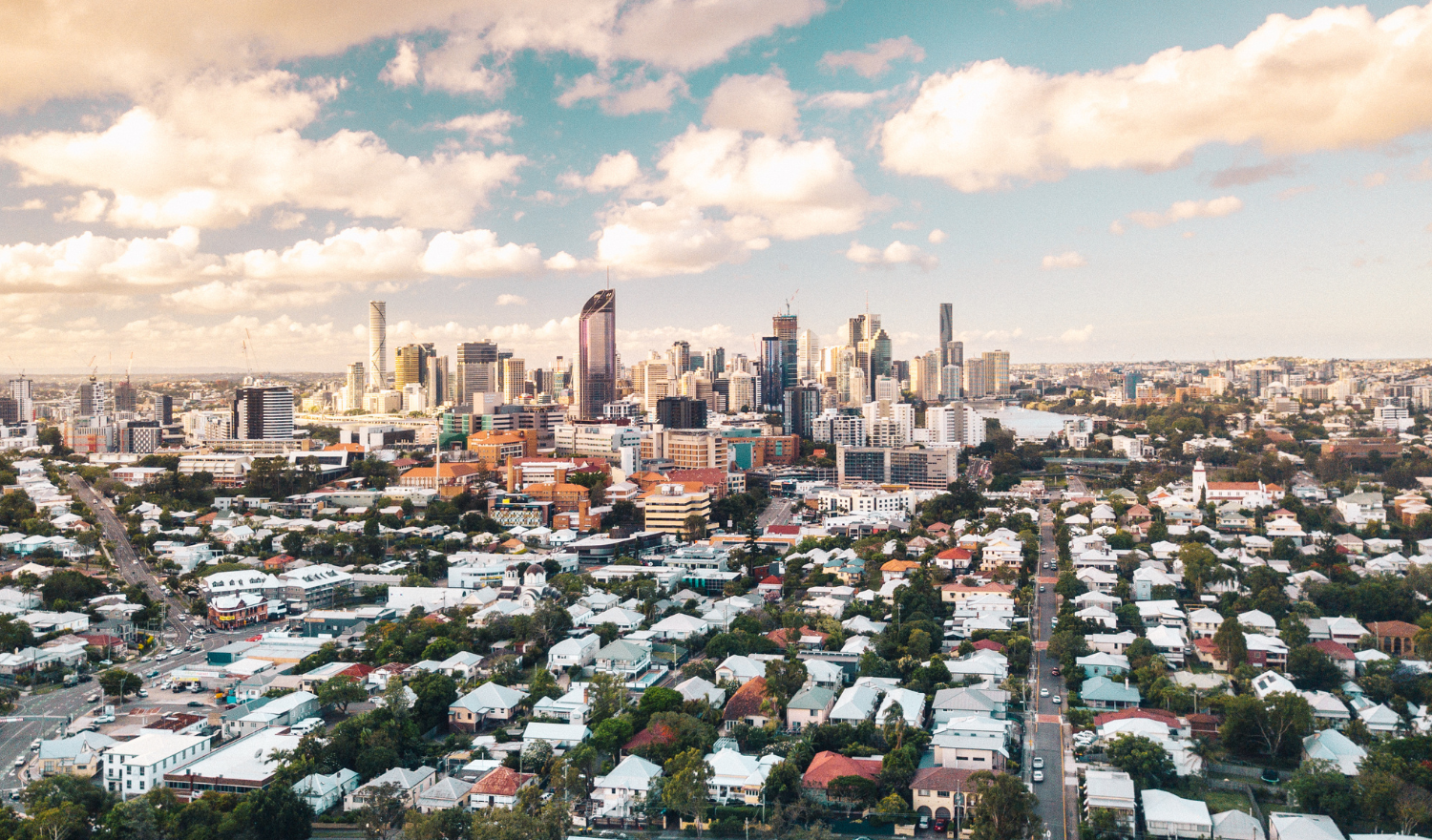
Rates are up again, and Brisbane has recorded the sharpest fall of any capital. Here's what that means for investors.
Brisbane's property market moved further into its new phase in September, and it moved faster than any other capital city.
Cotality's latest Home Value Index shows Brisbane dwelling values fell 1.5% in September. That edged past Sydney's 1.4% decline to become the sharpest monthly fall of the capitals. Brisbane values are now 5.4% below their May 2026 peak. A month ago, that gap was 2.7%.
Two days before those figures were released, the Reserve Bank lifted the cash rate by 25 basis points to 4.60%, its fourth increase this year.
Put those two things together and it's easy to see why the headlines have turned. For investors, though, the more useful question isn't how far Brisbane has fallen. It's what has actually changed, what hasn't, and where the opportunities and risks now sit.
Brisbane market snapshot

- Monthly change: −1.5%
- Quarterly change: −4.7%
- Annual change: +5.9%
- Median dwelling value: $1,048,880
- Total annual return: 9.6%
- Distance from market peak (May 2026): −5.4%
Source: Cotality Home Value Index, October 2026 (data to 30 September).
Brisbane's annual growth is still positive, but it is narrowing quickly. Last month, values were 10.8% higher than a year earlier. This month, the annual figure is 5.9%. As the stronger months of late 2025 and early 2026 roll out of the 12-month window, the annual result will increasingly reflect today's softer conditions.
The longer view is still worth keeping in mind. Brisbane values remain 55.4% higher than five years ago and 105.3% higher than ten years ago. That's context rather than comfort: it shows how much growth the market has absorbed, and why a period of adjustment isn't surprising.
The rate rise: what changes and what doesn't
On 29 September, the Reserve Bank of Australia lifted the cash rate to 4.60%. It was a unanimous decision, and it takes this year's increases to a full percentage point.
The RBA said inflation remains elevated and that some of the upside risks it flagged in August are now materialising, including higher global energy prices. The ABS monthly inflation figures released the following day supported that view. Headline inflation rose to 4.0% over the year to August, up from 3.5% in July, while trimmed mean inflation held at 3.6%. In Brisbane, annual inflation was 4.1%.
The RBA also noted that housing prices have fallen in most capital cities and that new housing lending has declined noticeably.
Cotality reports that the cash rate is now at its highest level in fifteen years, but households are carrying much more debt than they were last time rates were this high and thus borrowers are now far more sensitive to interest rates.
For buyers, the rate rise changes three things.
- Borrowing capacity. Lenders assess loans at the new rate plus a serviceability buffer, so many buyers can now borrow less than they could a month ago. If your pre-approval was issued before 29 September, it's worth checking it with your broker before you make an offer. Our Smart Property Finance partners can help.
- Holding costs. For investors, higher repayments sit on top of insurance, rates, maintenance and strata costs. Cash-flow assumptions need to reflect today's rate, not last year's.
- Competition. Fewer buyers can qualify for finance at previous price levels, which is part of why sales activity has dropped so sharply.
The next RBA decision is on Tuesday 3 November. Cotality notes the possibility of a further increase. We don't try to predict interest rates, and we'd always suggest speaking with your broker about how rate changes affect your own position.
What the rate rise doesn't change is what makes a good property. A well-located home that owner-occupiers want to live in is still the asset most investors should be looking for. What has changed is the price, the competition and the terms on which you may be able to buy it.
What else is weighing on demand
Interest rates are only part of the picture. Cotality identifies a combination of pressures behind the current downturn:
- affordability and mortgage-serviceability constraints
- higher interest rates and reduced borrowing capacity
- elevated living costs and weak real income growth
- persistently weak consumer confidence
- less favourable negative gearing and capital gains tax settings announced in the Federal Budget, which have already reduced investor demand.
The result is a market where demand has weakened broadly. Across the capital cities, 97% of suburbs recorded a fall in values over the three months to the end of September.
Fewer sales, more stock and more time
The clearest sign of the shift in Brisbane is in transaction activity.
Cotality estimates the number of Brisbane home sales over the past three months was 27.2% lower than a year earlier. That's the largest drop of any capital city, ahead of Sydney (−26.5%) and Perth (−24.2%).
At the same time, buyers have more to choose from. Across the capital cities, the flow of new listings was 9.2% lower than a year ago, yet total advertised stock was 23.1% higher. Homes are now taking a median of 39 days to sell, up from 23 days a year ago.
It's the same pattern we described in last month's report, and it has become more pronounced. Stock isn't building because owners are rushing to sell. It's building because properties are taking longer to sell.
Cotality makes an important observation here: the extra stock is improving choice for buyers, but many prospective buyers currently lack the confidence or the financial capacity to act. For buyers who are finance-ready, that means less competition than at any point in Brisbane's recent growth cycle.
Houses and units: both easing, units holding up better over the year

Source: Cotality Home Value Index, October 2026.
Both houses and units fell at a similar pace in September, so units are no longer escaping the downturn. Over 12 months, though, units have still outperformed houses, and the gap between the two medians is now more than $310,000.
That price gap continues to push some buyers towards units and townhouses, and the higher yield adds to their appeal for investors. But as we covered in Why Brisbane's Unit Market Is Defying Expectations, not every unit is a good investment. Building quality, body corporate costs, owner-occupier appeal and future competing supply all matter.
The rental market is loosening, slowly
Rental conditions are still tight by historical standards, but they have eased.
Cotality reports the national vacancy rate rose to 2.0% in September, up from a record low of 1.5% in February. Brisbane's vacancy rate was 2.1%. Both remain well below the pre-COVID decade average of 3.3%.
Rental growth has also slowed. National rents rose 0.3% in September, the smallest monthly increase since May 2025, taking annual growth to 5.5%. In Brisbane, house rents were up 6.7% over the year and unit rents 5.9%.
With rents still rising and values falling, gross yields are improving. Nationally, they reached 3.85%, the highest since August 2019, while Brisbane's gross dwelling yield is 3.5%. Even so, Cotality notes that neutral or positive cash flow remains hard to achieve once interest, insurance, maintenance and strata costs are included.
For investors and landlords, that points to two things. First, use conservative rent and vacancy assumptions rather than relying on the rental growth of the past few years. Second, price rentals to the current market. A rental appraisal is a good place to start. As Curtis and Trent discussed in Episode 8 of Brisbane Property Pulse, asking $30 a week above market on a $700-a-week property can cost $2,800 if it sits vacant for four weeks. It takes close to two years to earn that back.
Brisbane still isn't one market

Brisbane's headline result hides very different outcomes across the city. These were Greater Brisbane's strongest SA3 markets over the past 12 months:
- Sherwood–Indooroopilly: +10.7%
- Ipswich Hinterland: +10.1%
- Beenleigh: +9.1%
- Caboolture: +8.7%
- Springfield–Redbank: +8.5%
- Caboolture Hinterland: +8.2%
- Forest Lake–Oxley: +8.2%
- Sandgate: +8.1%
- Ipswich Inner: +8.0%
- Redcliffe: +7.9%
Curtis and Trent explored why in Episode 7 of Brisbane Property Pulse, comparing Brisbane City, Logan, Moreton Bay, Redlands and Ipswich. Two things stand out in this month's data. The strongest areas are spread across Brisbane's west, north, Logan, Ipswich and Moreton Bay, so performance isn't confined to one corridor. And even the strongest markets have slowed sharply. In July's data, Sherwood–Indooroopilly was up 20.4% over the year. It now leads Greater Brisbane at 10.7%.
A city-wide figure, whether it's a 1.5% monthly fall or 5.9% annual growth, tells you very little about an individual property. As we discussed in our Everton Park suburb insight, suburb selection is only the starting point. Street position, land, flood risk, housing type, future supply and the price paid can all change the investment case.
What we're seeing on the ground
The data is consistent with what we've been seeing in our own negotiations over recent months: selling agents approaching us earlier with off-market opportunities, buyers with more time to complete their due diligence, and more room to negotiate where vendor expectations haven't yet adjusted.
Curtis made an important point in Episode 6 of Brisbane Property Pulse: a vendor taking $50,000 off their asking price doesn't necessarily mean you've bought $50,000 below market value.
In a falling market, settled sales can lag behind what's happening in current negotiations. A comparable sale that settled in August may have been negotiated in June, when conditions were stronger. Establishing value now means looking at settled sales alongside very recent transactions and the length of time similar properties have been on the market.
That's where valuation expertise matters most, and it's at the centre of how we assess and negotiate for clients. It's easy to feel you've secured a bargain when the asking price drops. The real test is whether the price you pay reflects what the property is worth today, and what it is likely to be worth to the next buyer.
What hasn't changed
Cotality expects housing conditions to remain under downward pressure in the coming months. It also identifies factors that should help to limit the extent of the downturn:
- a labour market that remains reasonably tight, which supports household incomes and limits the risk of forced selling
- persistently low levels of new housing supply, held back by construction costs, capacity constraints and project feasibility
- the long lead times between approvals and completed homes, which means any increase in construction will take time to reach the market.
It assesses that the most likely outcome is a gradual drift lower in values rather than a material downturn, with conditions continuing to vary across regions, price points and buyer types.
The long-term drivers that brought investors to Brisbane, including population growth, infrastructure investment and a constrained supply pipeline, haven't disappeared. What has changed is the buying environment.
What does this mean for Brisbane property investors?
Brisbane is now falling faster than other capitals, borrowing costs have risen again, and fewer buyers are active. Those conditions shouldn't be understated.
But they don't make the market simply good or bad for investors. They make it different.
For buyers who are finance-ready, the current market offers things that were in short supply for most of the past five years: choice, time and negotiating room. For buyers who aren't, the priority is to understand your borrowing position at today's rates before anything else.
Rather than trying to pick the bottom of the market, we'd suggest focusing on four questions for any property you're considering:
- Location: where is it, and what supports demand there?
- Property: what exactly are you buying?
- Buyer: who else will want to live in it or buy it, and why?
- Supply: how easily can more of it be built nearby?
A softer market can improve the price and terms on which you buy a quality property. It doesn't turn a poor property into a good investment.
If you'd like to talk through how these conditions affect your plans, our team is happy to help. Get in touch with the Investeps team.




-min%20(1).webp)